
Chapli Kabab is easy to recognise before you even taste it. Unlike a neat Seekh Kebab shaped around a skewer, it arrives broad, rustic and textured, with plenty of surface exposed to the heat. The edges carry more colour and character, while the centre remains rich and meaty.
For anyone searching for the recipe of Chapli Kabab, the first thing to understand is that there is no single formula followed by every cook in Peshawar or Khyber Pakhtunkhwa. Family recipes, restaurant methods and regional preferences differ.
Traditional versions commonly bring minced meat together with ingredients such as tomato, onion, green chilli, coriander, pomegranate seeds and spices before the mixture is flattened and cooked. Some Peshawari cooks have traditionally used animal fat in the cooking process, while others use oil or ghee.
At Namak Mandi UAE, Authentic Chapli Kabab remains part of a much wider Peshawari Dastarkhwan, alongside karahi, charcoal barbecue, Peshawari Pulao Mandi and freshly prepared Dodai.
What Is Chapli Kabab?
Chapli Kabab is a broad, flattened meat kabab closely associated with Peshawar and the wider Pashtun food culture of Khyber Pakhtunkhwa.
Its shape is one of its defining characteristics.
Because the meat is flattened rather than formed into a thick ball or cylinder, a larger surface area meets the cooking heat. This contributes to the textured exterior and crisp edges that distinguish a good Chapli Kabab from softer kebab styles.
The dish is traditionally prepared from minced meat mixed with fresh ingredients, herbs and seasonings. Recipes vary considerably between cooks, which is why two authentic Chapli Kababs can still taste different.
Dawn has documented long-standing Chapli Kabab traditions across Peshawar and Mardan, including variations in the meat, seasoning and cooking fat used by individual kebab makers.
That variation is part of the food culture rather than a problem that needs to be corrected.
What Gives Chapli Kabab Its Signature Taste?
The answer is not one secret spice.
The character of Chapli Kabab comes from the interaction between the meat, fresh ingredients, coarse seasonings, texture and cooking heat.
A successful kabab needs balance. Too much binder can make it heavy. Too much moisture can make shaping difficult. Excessive spice can hide the meat, while insufficient heat can prevent the exterior from developing its recognisable character.
The best versions allow several elements to remain noticeable at once.
Minced Meat Forms the Foundation
The quality of the minced meat matters because it forms the majority of the kabab.
Traditional Chapli Kabab preparations vary between beef, buffalo, lamb or other locally preferred meats. The precise choice depends on region, cook and family tradition.
Whatever meat is used, the principle remains similar: the kabab should taste primarily of meat rather than binder or spice.
This philosophy feels particularly at home in Peshawari cooking, where the main ingredient is often allowed to remain clear.
At Namak Mandi, that idea appears throughout the menu: the meat speaks for itself.
Fresh Tomato and Onion Add Character
Fresh ingredients help separate Chapli Kabab from kebabs built only around meat and dried spices.
Chopped tomato and onion appear in many traditional versions. They introduce moisture, texture and freshness into the meat mixture.
The pieces should work with the mince rather than turn the kabab into a loose vegetable mixture. This is one reason experienced cooks pay close attention to proportion.
Coriander Is an Important Flavour
Coriander is commonly associated with traditional Chapli Kabab recipes, both as a fresh herb and in dried or crushed form depending on the preparation.
Crushed coriander seeds are particularly useful because they provide aroma and texture rather than disappearing completely into the mince.
Traditional recipes may also include cumin and other seasonings, but there is considerable variation between cooks.
Green Chilli Brings Fresh Heat
Chapli Kabab does not need to become overwhelmingly spicy to have character.
Fresh green chilli can provide a sharper kind of heat than a large quantity of ground chilli powder. Its flavour sits naturally beside tomato and coriander.
The amount can be adjusted for the people eating the kababs, especially when cooking for a mixed-age family.
Pomegranate Seeds Add a Distinctive Note
Dried pomegranate seeds appear in many documented Peshawari Chapli Kabab preparations.
They contribute a subtle tart element that helps distinguish the kabab from more straightforward minced-meat kebabs.
Not every cook uses exactly the same quantity or preparation, which again demonstrates why Chapli Kabab is better understood as a traditional food with variations rather than a fixed commercial formula.
A Traditional-Style Chapli Kabab Recipe for Home
The following is a general home-style framework inspired by commonly documented Chapli Kabab traditions. It is not the proprietary recipe used by Namak Mandi.
Ingredients Commonly Used
For a home preparation, you can work with:
- Fresh minced meat
- Finely chopped onion
- Chopped tomato
- Fresh coriander
- Green chillies
- Crushed coriander seeds
- Cumin
- Dried pomegranate seeds
- Salt
- Chilli according to preference
- Egg as required by the recipe
- A small amount of flour or another traditional binder where needed
- Cooking fat, ghee or oil according to your preferred method
Recipes across Peshawar and Khyber Pakhtunkhwa differ on the precise proportions, binder and cooking medium, so these ingredients should be understood as a traditional framework rather than one definitive formula.
How to Make Chapli Kabab
1. Prepare the Minced Meat
Place the fresh mince in a wide bowl so there is enough room to combine the ingredients evenly.
Avoid overworking it immediately. The goal is to create a mixture that holds its shape while retaining a substantial meat texture.
2. Prepare the Fresh Ingredients
Finely chop the onion, tomato, coriander and green chilli.
Large pieces can make the kababs difficult to shape, while ingredients chopped too finely may lose some of the rustic texture associated with the dish.
Moisture also matters. A very wet mixture can become difficult to handle, so home cooks may need to manage excess moisture from the fresh ingredients.
3. Add the Seasoning
Combine the fresh ingredients with crushed coriander, cumin, dried pomegranate seeds, salt and the preferred chilli seasoning.
The exact combination should reflect your taste rather than an attempt to make the kabab unnecessarily spicy.
Chapli Kabab should still taste of meat.
4. Add the Binder Carefully
Depending on the recipe being followed, egg and a modest amount of binder may be incorporated to help the mixture hold together.
This is an area where traditional recipes vary considerably. Some documented versions use corn flour, while individual cooks follow their own methods.
Too much binder can change the texture, so the purpose is simply to help the kabab hold its shape.
5. Rest the Mixture
Giving the mixture a short rest allows the ingredients to settle together and can make shaping easier.
At this stage, check whether it is firm enough to form broad patties without falling apart.
6. Shape the Kababs Broad and Flat
Take a portion of the mixture and flatten it into the recognisable Chapli shape.
Do not aim for perfectly identical circles.
Part of the character of Chapli Kabab comes from its broad, rustic surface. Flattening also increases the area exposed to the cooking heat, which helps create the exterior texture.
7. Cook Until the Exterior Develops Character
Traditional cooking methods vary. Chapli Kababs have historically been prepared using animal fat in some Peshawari establishments, while other cooks use oil or ghee.
For home cooking, use a method that is safe and practical for your kitchen.
Cook each kabab thoroughly, turning carefully so both sides develop colour and the meat is completely cooked through.
The finished kabab should have a noticeably cooked exterior without becoming dry throughout.
Why Chapli Kabab Should Not Be Perfectly Smooth
Modern food presentation often encourages everything to look uniform.
Chapli Kabab benefits from the opposite approach.
Its uneven surface is part of what gives the heat something to work with. Small ridges and edges can develop more colour, creating contrast against the centre.
Making the kabab excessively smooth or thick can move it closer to an ordinary meat patty.
The shape should communicate what the dish is before the first bite.
That broad, textured appearance is one reason Chapli Kabab stands out immediately when placed beside Seekh Kebab or grilled chops on a mixed Peshawari table.
Chapli Kabab vs Seekh Kebab
Both belong comfortably on a Pakistani Dastarkhwan, but they should not be confused.
Chapli Kabab is broad and flattened, giving it a larger cooked surface and distinctive edges.
Seekh Kebab is formed lengthways around a skewer, creating a different texture and relationship with the heat.
Neither replaces the other.
For a large group, serving both can make sense because they offer genuinely different eating experiences. For a smaller family meal, one kebab style may be enough if the table already includes karahi and barbecue.
What Should You Eat with Chapli Kabab?
Chapli Kabab becomes especially enjoyable when it is part of a balanced shared meal.
At Namak Mandi, Authentic Chapli Kabab can be paired with:
Gud Shinwari Karahi
The sizzling, juicy character of Gud Shinwari Karahi contrasts with the firmer, textured Chapli Kabab.
Add freshly prepared Dodai so everyone can enjoy the karahi directly from the shared pan.
Peshawari Pulao Mandi
Rice gives the meal a comforting base and works particularly well for a family table where several meat dishes are being shared.
Premium Gud Chops
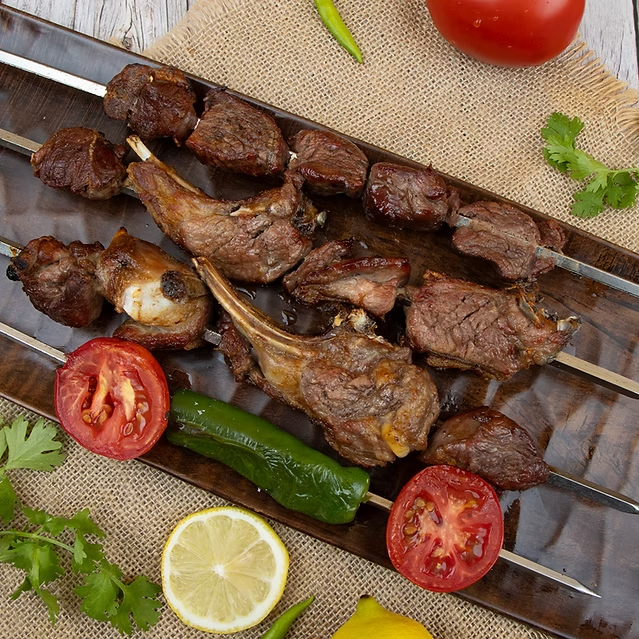
Premium Gud Chops bring charcoal-grilled lamb into the meal, creating another texture alongside Chapli Kabab.
Dodai
Warm Dodai makes the table feel unmistakably Peshawari. Tear it by hand and pass it around rather than treating bread as an afterthought.
Sheena Kahwa
Once the meat, rice and bread have been enjoyed, Sheena Kahwa gives the gathering a slower finish.
Chapli Kabab and Pashtun Hospitality
Chapli Kabab carries cultural meaning beyond the recipe.
Food in Pashtun hospitality is closely linked with the act of welcoming a guest. At Namak Mandi, that tradition is expressed through Melmastia—generously receiving and honouring every Mehmaan.
A shared Chapli Kabab fits naturally into that setting.
It is placed in the centre rather than protected as one person’s individual meal. Pieces are taken alongside rice, bread and karahi while conversation continues around the Dastarkhwan.
The recipe creates the kabab. The way it is shared creates the experience.
Try Authentic Chapli Kabab at Namak Mandi Dubai
If learning the recipe of Chapli Kabab has made you curious about how the dish fits into a traditional Peshawari meal, visit Namak Mandi Dubai in Al Nahda First.
Namak Mandi Dubai – Al Nahda
Hessa Tower, Al Ittihad Street
Al Nahda First, Dubai, UAE
Opening hours: Daily, 11:00 AM–1:00 AM
Call or WhatsApp: 050 464 9204
Parking is available at Hessa Tower, and Al Nahda Metro is approximately a five-minute walk away.
Guests can enjoy Authentic Chapli Kabab or Premium Nali Chapli alongside karahi, charcoal-grilled meat, Peshawari Pulao Mandi and Dodai.
Authentic Chapli Kabab in Abu Dhabi
Namak Mandi also brings its Peshawari menu to Mussafah, Abu Dhabi.
Namak Mandi Abu Dhabi – Mussafah
4th Thiqah Street, M-17
Mussafah Sanaiya, Abu Dhabi, UAE
Opening hours: Daily, 10:30 AM–12:00 midnight
Call or WhatsApp: 050 371 7639
The Abu Dhabi branch offers dine-in, takeaway, delivery by call, bulk orders and guest event bookings, along with a private dining room for groups.
Frequently Asked Questions
What is the authentic recipe of Chapli Kabab?
There is no single recipe used by every Peshawari cook. Traditional versions commonly combine minced meat with ingredients such as onion, tomato, coriander, green chilli, pomegranate seeds and seasonings before the mixture is flattened and cooked. Recipes and proportions vary between families and restaurants.
Why is Chapli Kabab flat?
Its broad, flattened shape exposes more of the meat to the cooking surface. This helps create the textured exterior and crisp edges that distinguish Chapli Kabab from cylindrical kebabs such as Seekh Kebab.
Are pomegranate seeds used in Chapli Kabab?
Dried pomegranate seeds appear in many documented Peshawari Chapli Kabab preparations and can contribute a subtle tart note. Recipes vary, however, so they should not be presented as proof that every authentic Chapli Kabab follows exactly the same formula.
Is Chapli Kabab made with beef or lamb?
Traditional preparations vary. Beef, buffalo and lamb have all been associated with Chapli Kabab depending on the cook and region. The specific meat should therefore be confirmed for the individual restaurant or recipe being followed.
Where can I eat authentic Chapli Kabab in Dubai?
Namak Mandi serves Authentic Chapli Kabab at Hessa Tower in Al Nahda First, Dubai. Guests can pair it with Gud Shinwari Karahi, Peshawari Pulao Mandi, charcoal-grilled dishes and Dodai.
Does Namak Mandi use this exact Chapli Kabab recipe?
This article describes a general traditional-style home recipe and does not disclose or claim to reproduce Namak Mandi’s kitchen recipe. Namak Mandi serves its own Authentic Chapli Kabab as part of the restaurant’s Peshawari menu.
Taste the Dish Beyond the Recipe
Learning the recipe of Chapli Kabab explains the ingredients, but the full Peshawari experience begins when the kabab reaches a shared Dastarkhwan beside hot karahi, rice and warm Dodai.
Visit Namak Mandi Al Nahda to enjoy Authentic Chapli Kabab as part of the food culture that made the dish a Pashtun favourite. Call or WhatsApp 050 464 9204 for Dubai reservations, family meals or group orders.
For Abu Dhabi dining and private-group enquiries, contact Namak Mandi Mussafah on 050 371 7639.
Explore the menu and branch information at www.namakmandidubai.com. Follow @namakmandidubai and @namakmandi.abd on Instagram for Chapli Kabab, Peshawari dishes and restaurant updates.
You can learn the recipe at home. Come to Namak Mandi to experience the Dastarkhwan.
This Is Not Just Food. This Is Peshawar.