
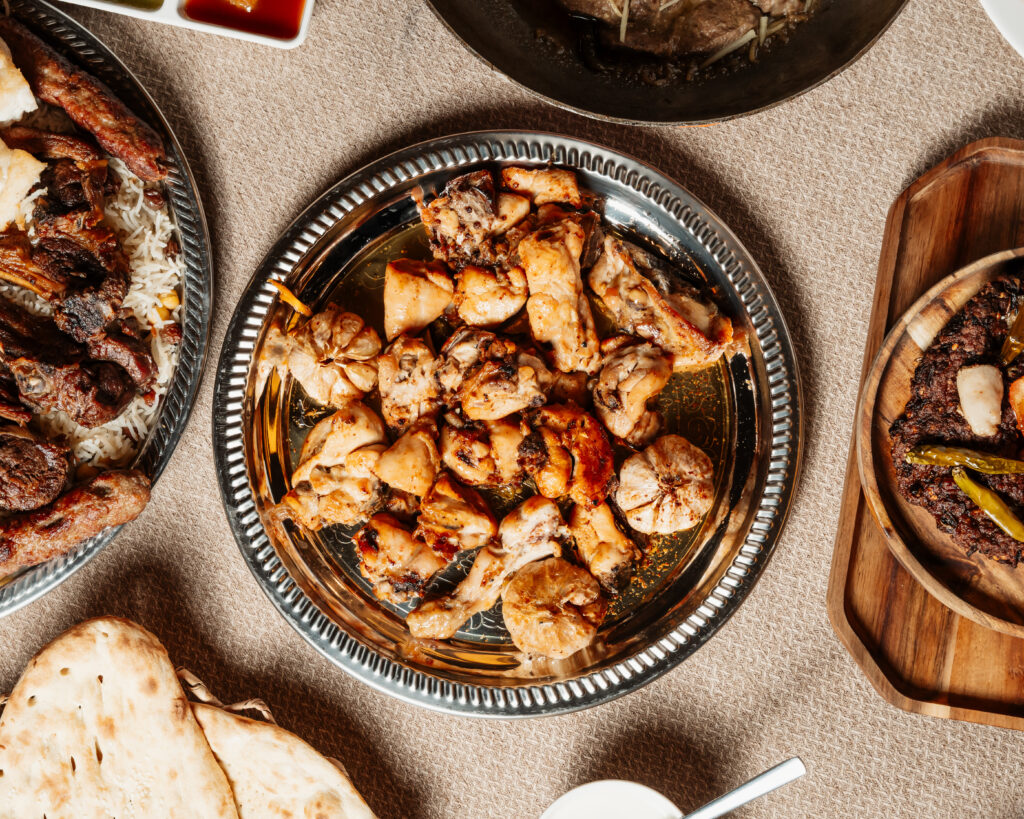
There is a point in meat cooking when the character of a dish changes. The excess moisture has reduced, the ingredients cling more closely to the meat, and every turn of the spoon brings the aroma back from the hot pan. That concentrated stage is at the heart of bhuna gosht.
For people discovering Pakistani cuisine in Dubai, bhuna gosht is useful to understand because it explains an important cooking idea: sometimes flavour comes not from adding more ingredients, but from patiently cooking what is already in the pan.
The word bhuna relates to frying or cooking ingredients over heat, while gosht means meat. In Pakistani cooking, the idea of bhunai is closely associated with cooking and reducing ingredients until they become concentrated around the meat.
At Namak Mandi UAE, that respect for meat-led cooking can also be seen across the Peshawari menu, from freshly prepared karahis to charcoal-grilled lamb and barbecue.
Bhuna Gosht Is as Much a Technique as a Dish
It is easy to think of bhuna gosht simply as another Pakistani meat curry, but the word bhuna tells you something about the way the food is cooked.
The important idea is reduction.
Instead of leaving a large amount of thin liquid around the meat, the ingredients are cooked down so that the flavour becomes more concentrated. The meat and the reduced mixture around it become closely connected.
This is why bhuna dishes often appear richer and less watery than many gravy-based meat preparations.
The exact recipe can differ significantly between households, restaurants and regions. Some versions may use different meats, spice combinations or cooking fats. There is no reason to pretend that one formula represents every Pakistani family.
What remains recognisable is the attention given to cooking the meat and surrounding ingredients until the dish develops a deeper, more concentrated character.
Why the Bhunai Stage Matters
Anyone who grew up around Pakistani cooking has probably heard someone say that the masala still needs to bhuno a little longer.
That instruction is not simply about cooking time.
During the bhunai stage, ingredients are worked over heat as moisture reduces. Rather than constantly adding water and creating a loose curry, the cook gives the ingredients time to come together.
The process demands attention. Heat that is too aggressive can catch the ingredients at the bottom of the pan. Too much added liquid can move the dish away from the concentrated character people expect.
This is where cooking skill becomes visible.
The finished meat should taste as though the surrounding flavours have developed with it rather than simply being poured around it at the end.
Bhuna Gosht Versus a Typical Meat Curry
Bhuna gosht and a more gravy-forward meat curry can contain some similar ingredients, but the final experience is different.
A conventional curry may deliberately contain enough gravy to spoon over rice or gather with bread. Bhuna gosht generally places greater emphasis on reduction, leaving the meat coated in a more concentrated mixture.
That difference affects how the dish is eaten.
A generous curry invites you to use plenty of rice or bread with its gravy. Bhuna gosht puts more attention on each piece of meat and the flavour clinging directly to it.
Neither style is automatically better. They simply satisfy different preferences.
Someone who enjoys deeply concentrated meat dishes may naturally lean towards bhuna gosht, while another diner may prefer a karahi that arrives sizzling with its own fresh-cooked juices.
How Is Bhuna Gosht Different from Karahi?
Bhuna gosht and karahi can sometimes appear similar to an unfamiliar diner because both may be meat-forward and comparatively less liquid than some curries.
But they should not automatically be treated as the same dish.
Bhuna describes an important cooking approach centred on frying and reducing, while karahi refers to a recognised style of cooking associated with the karahi vessel and its own culinary traditions.
In Peshawari cooking, karahi often demonstrates the same wider respect for the main ingredient: the meat should remain recognisable rather than disappearing under an unnecessarily complicated sauce.
At Namak Mandi, Gud Shinwari Karahi expresses this meat-led philosophy. The restaurant’s approach uses straightforward ingredients such as coarse salt, tomatoes, ginger and green chillies to support the meat.
For someone interested in bhuna gosht because they enjoy concentrated meat flavours, exploring Pakistani karahi can reveal another important side of the country’s meat-cooking traditions.
Why Meat Quality Matters in Dishes Like Bhuna Gosht
A dish with reduced moisture and concentrated flavour leaves very little room for poor meat to hide.
That is part of what makes this style of cooking so interesting.
When the meat is one of the dominant elements, texture matters. The diner notices whether it has been handled carefully and whether the cooking has allowed it to become tender without losing all character.
The same principle appears strongly in Peshawari cuisine.
Namak Mandi’s philosophy is simple: the meat speaks for itself.
Rather than relying on heavy spice to become the identity of every dish, fresh lamb and chicken remain central to its karahis, chops and barbecue.
This connects bhuna-style cooking and Peshawari food at a broader level. Both remind the diner that technique and ingredient quality can matter more than adding more layers for the sake of complexity.
What Should You Eat with Bhuna Gosht?
Because bhuna gosht tends towards a concentrated meat preparation, bread is a natural partner.
A piece of bread can gather the reduced mixture around the meat without requiring a large amount of gravy. Rice can also work well, particularly when the meal includes other dishes.
The right pairing depends on the rest of the table.
If bhuna gosht is the main meat dish, rice can provide a softer base. If several meat dishes are being served, bread may give the meal enough balance without adding another heavy component.
Pakistani meals are rarely improved by following rigid rules. The better question is how the dishes work together.
At a Peshawari Dastarkhwan, that same thinking applies. One rice dish, one karahi, a grilled selection and warm bread usually create more contrast than ordering several similar meat dishes.
Bhuna Gosht and the Pakistani Love of Slow, Patient Cooking
Pakistani food contains many dishes where time is part of the flavour.
Some need slow cooking for tenderness. Others depend on reducing liquid, frying ingredients carefully or allowing meat to absorb the character of the cooking base.
Bhuna gosht sits comfortably within that tradition.
It is not impressive because it requires an endless ingredient list. Much of its appeal comes from what happens during cooking.
That is a useful lesson for anyone trying to understand Pakistani cuisine beyond familiar restaurant names such as biryani and kebabs.
The food is often defined by technique: how the heat is controlled, when liquid is added, how long meat is allowed to cook and when the dish is considered ready.
From Bhuna Gosht to Peshawari Fire Cooking
While bhuna gosht offers one way to understand Pakistani meat cookery, Peshawari cuisine offers another.
At Namak Mandi, fire plays a visible role.
Gud Shinwari Karahi brings direct-heat cooking to the table. Premium Gud Chops show what charcoal can do to lamb, while Vreeta BBQ and Vreeta Dum BBQ explore another form of slow, fire-led meat preparation.
Authentic Chapli Kabab provides a different texture altogether, with its broad form and cooked edges.
These dishes are not versions of bhuna gosht, and they should not be described that way. Instead, they demonstrate the breadth of Pakistani meat cooking.
For a diner interested in bhuna gosht, trying these dishes can expand the question from “What is this one curry?” to “How many different ways does Pakistani cuisine allow meat to express itself?”
Building a Meat-Led Pakistani Dastarkhwan
A good shared table does not need five dishes that all offer the same texture.
For two or three people, one meat-led karahi with Dodai can provide the centre of the meal.
A family might build a broader spread around:
- Gud Shinwari Karahi
- Authentic Chapli Kabab
- Peshawari Pulao Mandi
- Dodai or Tandoori Dodai
A larger group can introduce Premium Gud Chops, Vreeta BBQ or a Mix Grill Platter.
This creates contrast between pan cooking, charcoal grilling, rice and bread.
The point is not to order everything. A good Dastarkhwan gives each dish enough space to be noticed.
The Pashtun Approach to Hospitality
Pakistani meat dishes often become especially meaningful when they are shared rather than eaten alone.
At Namak Mandi, that communal approach is connected to Melmastia, the Pashtun tradition of generously welcoming and honouring a guest.
Guests are treated as Mehmaan.
The rice sits in the centre. Bread is passed around. The karahi remains available to everyone rather than disappearing onto one individual plate.
Once the main dishes are finished, Sheena Kahwa can slow the pace of the gathering further.
This helps explain why understanding Pakistani food requires more than knowing recipes. A dish may tell you how people cook, but the Dastarkhwan tells you how people welcome each other.
Explore Pakistani Meat Traditions at Namak Mandi Dubai
Namak Mandi Dubai gives diners an opportunity to explore meat-led Peshawari cooking through verified dishes such as Gud Shinwari Karahi, Premium Gud Chops, Vreeta BBQ, Authentic Chapli Kabab and Peshawari Pulao Mandi.
The restaurant is located at:
Namak Mandi Dubai – Al Nahda
Hessa Tower, Al Ittihad Street
Al Nahda First, Dubai, UAE
Opening hours: Daily, 11:00 AM–1:00 AM
Call or WhatsApp: 050 464 9204
Parking is available at Hessa Tower, and Al Nahda Metro is approximately a five-minute walk away.
The branch offers dine-in, takeaway, delivery by call, bulk orders and guest event bookings.
Peshawari Meat and Karahi in Abu Dhabi
The same Namak Mandi food philosophy is available at the Mussafah branch in Abu Dhabi.
Families and groups can explore karahi, charcoal-grilled meats, Chapli Kabab, rice and freshly prepared Dodai. The branch also offers a private dining room for family occasions, corporate groups and other gatherings.
Namak Mandi Abu Dhabi – Mussafah
4th Thiqah Street, M-17
Mussafah Sanaiya, Abu Dhabi, UAE
Opening hours: Daily, 10:30 AM–12:00 midnight
Call or WhatsApp: 050 371 7639
The branch provides dine-in, takeaway, delivery by call, bulk orders and guest event bookings.
Frequently Asked Questions
What is bhuna gosht?
Bhuna gosht is a meat dish associated with a cooking style in which ingredients are fried and cooked down so the surrounding flavours become concentrated around the meat. Recipes vary between regions, families and restaurants, so there is no single universal preparation.
What does “bhuna” mean in Pakistani cooking?
Bhuna relates to frying or cooking ingredients over heat. In practical Pakistani cooking, the term is often associated with working ingredients over heat while reducing moisture to develop a concentrated flavour and texture.
Is bhuna gosht the same as karahi?
No. Bhuna describes a cooking approach, while karahi is a distinct style of dish associated with its cooking vessel and regional traditions. Although both can produce meat-forward dishes, they should not be treated as interchangeable names.
Is bhuna gosht eaten with rice or bread?
Both can work. A concentrated bhuna-style meat dish pairs naturally with bread because it can gather the mixture coating the meat. Rice is also suitable, particularly when the dish forms part of a larger Pakistani meal.
Where can I try traditional Peshawari meat dishes in Dubai?
Namak Mandi Dubai in Al Nahda First specialises in Peshawari food. Guests can explore Gud Shinwari Karahi, Premium Gud Chops, Vreeta BBQ, Authentic Chapli Kabab, Peshawari Pulao Mandi and Dodai.
Does Namak Mandi have a branch in Abu Dhabi?
Yes. Namak Mandi Abu Dhabi is located in Mussafah Sanaiya. The restaurant serves Peshawari karahi, charcoal-grilled meats, Chapli Kabab, rice and other dishes, and also offers a private dining room.
Discover the Meat-Led Traditions Behind Bhuna Gosht
Understanding bhuna gosht opens the door to a much wider side of Pakistani food: patient cooking, concentrated flavour and respect for the meat at the centre of the dish.
To explore another expression of that meat-first philosophy, gather around the Peshawari Dastarkhwan at Namak Mandi Dubai for Gud Shinwari Karahi, charcoal-grilled Premium Gud Chops, Authentic Chapli Kabab and warm Dodai.
Call or WhatsApp 050 464 9204 to reserve a table or plan a family meal in Al Nahda. For Abu Dhabi dining and private-group enquiries, contact Namak Mandi Mussafah on 050 371 7639.
Explore the menu and branch details at www.namakmandidubai.com. Follow @namakmandidubai and @namakmandi.abd on Instagram for Peshawari meat dishes, live-fire cooking and restaurant updates.
Come for the meat. Stay for the Melmastia.
This Is Not Just Food. This Is Peshawar.

