
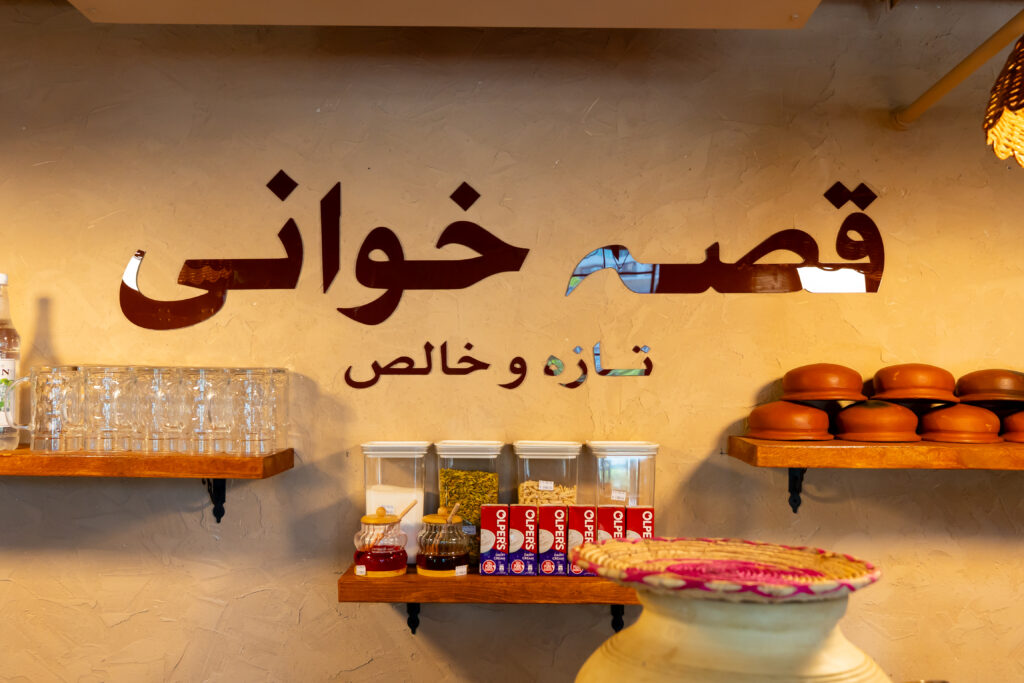
After a table of sizzling karahi, charcoal-grilled meat, rice and warm Dodai, the pace of a Peshawari meal begins to change. Plates become quieter, conversation stretches a little longer, and a warm cup of tea gives everyone a reason to remain seated.
That is where kahwa chai comes in.
At Namak Mandi UAE, Sheena Kahwa is part of the wider Peshawari dining experience. It is not simply a hot drink added to the end of the menu. It reflects a culture in which meals are shared slowly and guests are encouraged to stay, talk and feel welcomed.
For diners discovering Pashtun food in Dubai or Abu Dhabi, finishing with kahwa offers another small but meaningful connection to the hospitality of Peshawar.
What Is Kahwa Chai?
Kahwa is a traditional tea enjoyed across parts of South and Central Asia, with different regions developing their own styles and serving traditions.
Because recipes vary, there is no single version that represents every culture. At Namak Mandi, the relevant menu item is Sheena Kahwa, served as part of its Peshawari and Pashtun dining experience.
The important point is not to treat kahwa as an ordinary cup of tea served automatically after food. Within a traditional hospitality setting, it can mark the transition from eating to sitting, talking and spending time with the people around the table.
That role fits naturally with Namak Mandi’s wider approach to dining.
The meal begins with fire, shared dishes and freshly prepared meat. Kahwa brings the evening down to a gentler pace.
Why Is Kahwa Served After a Meal?
There is no single rule saying that kahwa must only be consumed after food. It may be enjoyed at different times depending on family and regional traditions.
After a generous meal, however, a warm cup of kahwa provides a natural closing ritual.
The table has moved through rice, karahi, barbecue and bread. Guests are no longer deciding what to order or passing the main dishes around. A smaller cup encourages everyone to sit for a few more minutes rather than ending the gathering abruptly.
This matters in a culture where hospitality is measured not only by what is served but by how a guest is received.
At Namak Mandi, diners are welcomed as Mehmaan, or honoured guests. Sheena Kahwa becomes part of that welcome by extending the experience beyond the final bite.
Kahwa and the Rhythm of a Peshawari Meal
A traditional Peshawari-style meal has its own rhythm.
It might begin with a Peshawari Pulao Mandi placed in the centre, followed by Gud Shinwari Karahi, Authentic Chapli Kabab, Premium Gud Chops or Vreeta BBQ.
Dodai is torn and passed around. Different dishes are tasted from the same spread. Nobody needs to remain focused on a single plate.
Once the main dishes are finished, Sheena Kahwa changes the mood.
The fire-cooked part of the meal has ended, but the gathering has not.
That pause gives the table a sense of completion without making it feel rushed. People continue talking, family members remain together, and the restaurant experience moves naturally from food into hospitality.
Melmastia: Why the Guest Matters
To understand why tea matters at the end of a meal, it helps to understand Melmastia.
Melmastia is the Pashtun tradition of generously welcoming and honouring a guest.
At Namak Mandi, that idea appears throughout the dining experience. Guests are treated as Mehmaan. Food is placed in the centre for sharing, the Dastarkhwan is generous, and the atmosphere encourages people to eat together rather than separately.
Sheena Kahwa fits into this same tradition.
It is a simple gesture, but culturally, simple gestures can carry weight. Offering a warm drink after the meal tells the guest that the evening does not need to end the moment the plates are cleared.
Hospitality continues.
Kahwa Chai After a Rich Meat-Based Meal
Peshawari food is strongly associated with meat, fire and hearty shared dishes.
A table at Namak Mandi may include Gud Shinwari Karahi, Premium Gud Chops, Vreeta BBQ, Authentic Chapli Kabab, Peshawari Pulao Mandi and freshly prepared Dodai.
After that kind of meal, many guests naturally prefer something warm and simple rather than another heavy dish.
Kahwa works well in that moment because it shifts the focus away from eating and towards conversation.
It is important not to turn that cultural preference into an unsupported health claim. Kahwa should not be described as something that medically “burns fat”, “detoxes” the body or guarantees better digestion.
Its appeal is simpler: it is warm, traditional and well suited to the slower end of a generous meal.
Sheena Kahwa at Namak Mandi
At Namak Mandi, Sheena Kahwa is one of the menu items that reinforces the restaurant’s Peshawari identity.
A first-time guest may initially visit for Gud Shinwari Karahi or Chapli Kabab. Someone else might come specifically for Premium Gud Chops, barbecue or Peshawari Pulao Mandi.
But the meal feels more complete when it ends with something connected to the same food culture.
That is where Sheena Kahwa has value.
It is not there to compete with the main dishes. It does the opposite. It gives the evening a quieter ending.
For guests who already know Peshawari hospitality, the ritual may feel familiar. For those discovering it for the first time, it adds another layer to the experience beyond meat and fire.
What Should You Eat Before Kahwa?
There is no fixed meal that must come before kahwa, but several Namak Mandi dishes pair naturally with the idea of ending the evening over tea.
Gud Shinwari Karahi
Gud Shinwari Karahi is one of the clearest introductions to Namak Mandi’s meat-led Peshawari cooking.
Enjoy it hot with Dodai, then allow the table to slow down before ordering Sheena Kahwa.
Authentic Chapli Kabab
Authentic Chapli Kabab adds texture and a recognisable Pashtun favourite to the meal.
Its broad shape and cooked edges create contrast with softer rice and bread, making it easy to include in a shared family spread.
Premium Gud Chops
Premium Gud Chops bring charcoal character to the table. They work especially well when the group wants one grilled item alongside rice or karahi.
After the richness of lamb and charcoal, kahwa provides a simple transition away from the main course.
Peshawari Pulao Mandi
Peshawari Pulao Mandi gives larger groups a shared rice dish around which other meats can be arranged.
For families, it can form the centre of the meal while karahi, Chapli Kabab or barbecue provide variety.
Special Peshawari Halwa
When the table wants something sweet, Special Peshawari Halwa can be shared before or alongside the final tea experience.
The combination gives the meal a traditional finish without requiring a large or elaborate dessert course.
Kahwa for Family and Group Dining
Kahwa makes particular sense when the meal involves more than two people.
Families often remain at the table after eating. Parents talk while children settle down, relatives catch up, and nobody is in a rush to leave immediately.
The same applies to a group of friends or colleagues enjoying a long dinner.
A pot or round of tea gives the gathering another small chapter.
At Namak Mandi, that works especially well because the main meal is already communal. Rice, karahi, barbecue and bread are shared from the centre, so ending with kahwa feels consistent with the way the entire meal has been enjoyed.
Introducing Non-Pakistani Guests to Peshawari Dining
Sheena Kahwa can also be part of introducing someone to Pashtun food for the first time.
A guest unfamiliar with Peshawari cuisine may begin with familiar dishes such as rice, lamb chops or grilled chicken. From there, they can try Gud Shinwari Karahi, Authentic Chapli Kabab and freshly prepared Dodai.
Finishing with Sheena Kahwa helps show that the experience is about more than individual recipes.
It introduces the idea that how a meal ends can matter just as much as how it begins.
For colleagues, visiting friends or family members from different backgrounds, that makes the evening feel culturally connected without requiring a long explanation at the table.
Sheena Kahwa in Dubai at Namak Mandi Al Nahda
Guests looking to experience kahwa chai as part of a full Peshawari meal can visit Namak Mandi Dubai in Al Nahda First.
The branch is located at Hessa Tower on Al Ittihad Street and is convenient for diners coming from Al Nahda and nearby areas of Sharjah.
Parking is available at Hessa Tower, while Al Nahda Metro is approximately a five-minute walk away.
Namak Mandi Dubai – Al Nahda
Hessa Tower, Al Ittihad Street
Al Nahda First, Dubai, UAE
Opening hours: Daily, 11:00 AM–1:00 AM
Call or WhatsApp: 050 464 9204
The branch offers dine-in, takeaway, delivery by call, bulk orders and guest event bookings.
Kahwa and Peshawari Dining in Abu Dhabi
The same Namak Mandi experience is available in Mussafah, Abu Dhabi.
Guests can enjoy Sheena Kahwa after a shared meal of Peshawari Pulao Mandi, karahi, Chapli Kabab, charcoal barbecue and Dodai.
A private dining room is also available at the Abu Dhabi branch for family occasions, business meals and group gatherings.
Namak Mandi Abu Dhabi – Mussafah
4th Thiqah Street, M-17
Mussafah Sanaiya, Abu Dhabi, UAE
Opening hours: Daily, 10:30 AM–12:00 midnight
Call or WhatsApp: 050 371 7639
The branch offers dine-in, takeaway, delivery by call, bulk orders and guest event bookings.
Frequently Asked Questions
What is kahwa chai?
Kahwa is a traditional tea enjoyed across different regional cultures, with recipes and serving customs varying from place to place. At Namak Mandi, guests can enjoy Sheena Kahwa as part of a Peshawari dining experience.
Why do people drink kahwa after a meal?
Kahwa is often enjoyed after a meal because it provides a warm, simple way to slow the gathering down. In a hospitality-focused setting, it also gives guests time to remain together after the main dishes have been finished.
Is kahwa the same everywhere?
No. Kahwa traditions and recipes differ across regions and communities. It is better to understand the specific version offered by the restaurant rather than assume that every kahwa is prepared in exactly the same way.
Where can I drink Peshawari kahwa in Dubai?
Namak Mandi Dubai serves Sheena Kahwa at its Al Nahda First branch in Hessa Tower. Guests can enjoy it after traditional Peshawari dishes such as Gud Shinwari Karahi, Chapli Kabab, barbecue, Peshawari Pulao Mandi and Dodai.
What should I eat before Sheena Kahwa at Namak Mandi?
A balanced Peshawari meal can include Gud Shinwari Karahi, Authentic Chapli Kabab, Peshawari Pulao Mandi, Premium Gud Chops and Dodai. Special Peshawari Halwa may also be added when the table wants something sweet.
Does Namak Mandi serve Sheena Kahwa in Abu Dhabi?
Yes. Guests can enjoy Sheena Kahwa at the Namak Mandi branch in Mussafah, Abu Dhabi, as part of the wider Peshawari dining experience.
End Your Peshawari Meal with Kahwa Chai
The next time you gather around a Peshawari Dastarkhwan, do not rush away once the karahi, rice and Dodai are finished.
Order kahwa chai the Namak Mandi way with Sheena Kahwa, remain at the table for a little longer and let the meal end at the pace of Peshawari hospitality.
In Dubai, visit Namak Mandi Al Nahda or call or WhatsApp 050 464 9204 to reserve a table or plan a family gathering.
For Abu Dhabi dining and private-group enquiries, contact Namak Mandi Mussafah on 050 371 7639.
Explore the menu and branch details at www.namakmandidubai.com. Follow @namakmandidubai and @namakmandi.abd on Instagram for Peshawari dishes, Sheena Kahwa and restaurant updates.
Stay for the kahwa. Leave as a Mehmaan.
This Is Not Just Food. This Is Peshawar.

